Education and Study · News · 🇧🇷 Brazil
UFSM research uses AI to correct satellite soil moisture readings and cuts the error by 73%
Researchers in southern Brazil combined data from NASA's SMAP satellite with terrain, climate and soil type to get estimates much closer to what field sensors measure.
- Profession
- Researcher, Farmer
- Tools
- Random Forest, XGBoost
- Source
- comprerural.com ↗
- Country
- 🇧🇷 Brazil
- Report date
- October 28, 2026
- Verified on
- October 30, 2026
See more: AI for researchers · AI for farmers
What they did
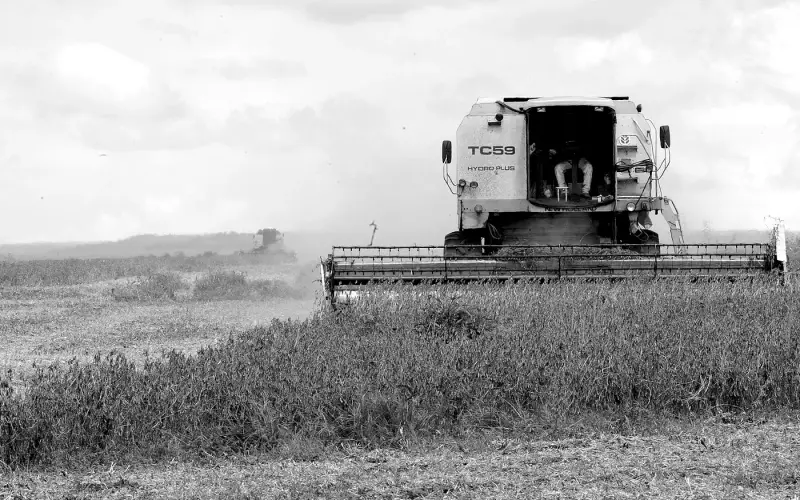
Researchers from the Federal University of Santa Maria (UFSM), working with the University of Wisconsin-Madison, studied the Vacacaí River basin in Rio Grande do Sul, an area of about 11,200 km² with pasture, grain and rice. They installed moisture sensors 5 cm deep, taking hourly readings between February and November 2025, and trained two machine learning models (Random Forest and XGBoost) to adjust the satellite estimate using terrain, land surface temperature, rainfall, evapotranspiration, vegetation and the soil's sand and clay content.
How it went
The average error fell from 0.100 to about 0.027 m³/m³, a reduction of roughly 72.6%, and the fit to field measurements (R²) rose from 0.34 to about 0.89. Both algorithms performed similarly. The study was published on October 27, 2026 in the journal Environmental Earth Sciences, and the news report stresses that the figures hold for the conditions tested and cannot automatically be generalized to other regions.
Good to know
The gain came as much from choosing the environmental data as from the algorithm. In flooded rice areas the satellite tends to overestimate moisture, so field sensors are still needed to calibrate the model.
The prompt
I have soil moisture readings from [number] sensors in the [name] region and the satellite estimate from [product] for the same days. Put together a plan to train a model that corrects the satellite using [available variables: terrain, rainfall, soil type, etc.]: how to merge the data, how to split training and test sets without leakage, which metrics to compare against the original satellite, and how to check whether the model works in places with no sensor.
Replace what is in [brackets]. Prompt written by us from the account, not a literal copy of the source. Do not paste other people’s personal data (privacy laws such as LGPD and GDPR apply).
Summary in our own words. Results as stated in the original account; we have not tested or audited them. Read the source ↗ Found a mistake?
Similar cases
 01
A lab lets Claude agents run 13 bioinformatics challenges end to end
In a research hackathon, agents handled the literature review, design, code, benchmarks and report. They gained a lot in speed and little in accuracy.
 02
Economist uses Claude Code to collect and analyze public data
A Yale professor showed the agent finding U.S. Census data, cleaning spreadsheets and building a database from company filings.
 03
Agents search for new magnetic materials
A team of agents ran simulations and found candidates for room-temperature magnetic semiconductors.
04Systematic literature review with an agent
A researcher showed an agent that creates PICO questions, screening criteria and a PRISMA diagram.
05Pharmaceutical researcher finds protein structures with the browser
A plain-language request pulled up the three most recent GSK3B complexes in the Protein Data Bank.
06Instructor grades assignments with Claude and reviews every score before posting
A cybersecurity instructor pulls submissions through the Canvas API, gets a score and comment per criterion from Claude, and only posts them after reviewing.
07Reserving public library books with an agent
Eleanor Konik asks for chess books for her son and the agent places holds on the titles through the library website.
08Assessing, teaching a tailored lesson and reassessing with an agent
A former teacher trained an agent to give assessments, build lessons for the gaps and reassess.